

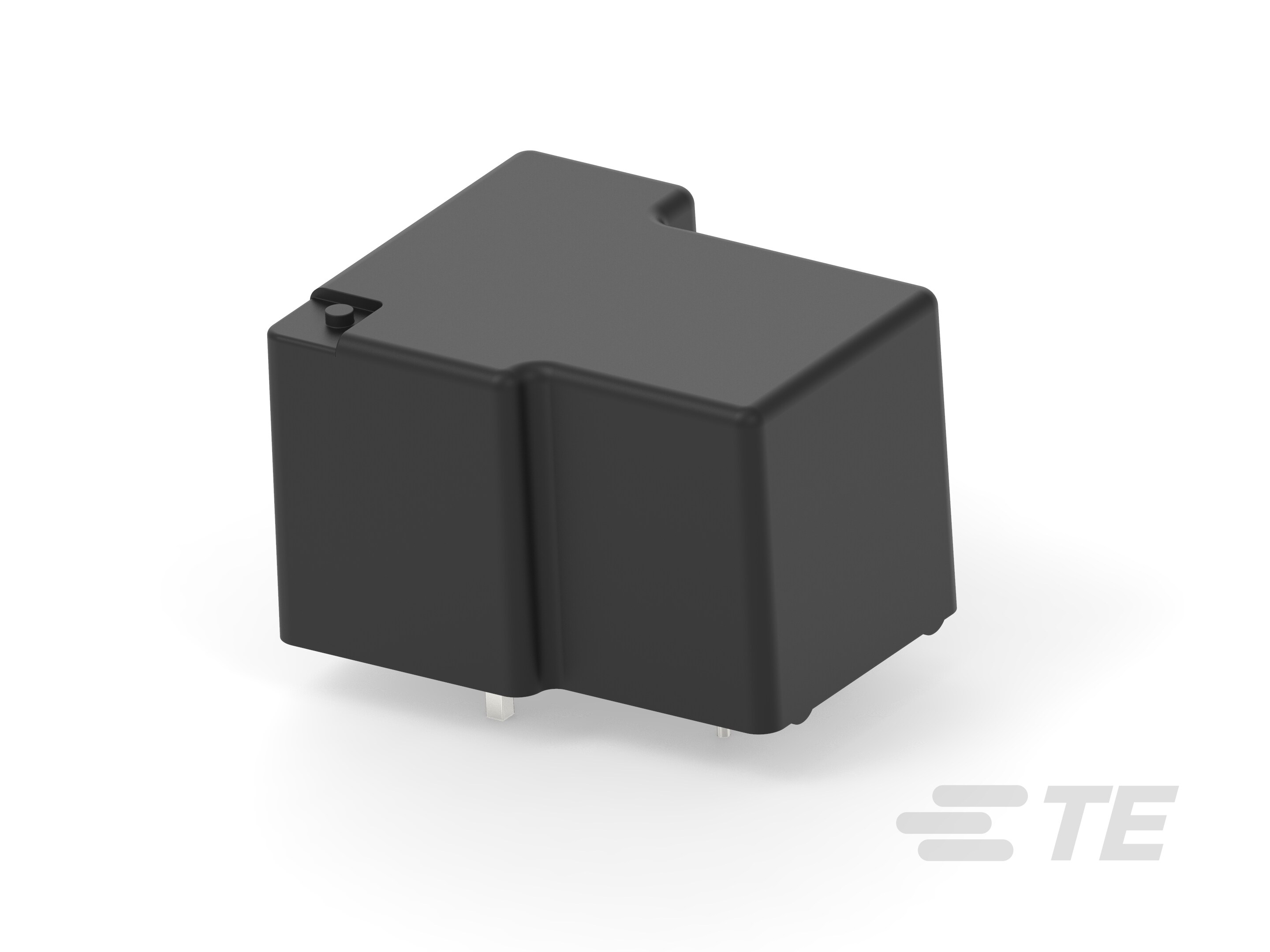
| Attribute | Value |
|---|---|
| Product Category: | |
| Manufacturer: | TE Connectivity |
| Manufacturer Part Number: | TE Connectivity 1-1393210-4 |
| Amperage: | 30 A |
| Mount Type: | Printed Circuit Board |
| Contact Material: | Silver Cadmium Oxide (AgCdO) |
| Contact Plating: | Silver Cadmium Oxide (AgCdO) |
| Number of Poles: | 1 |
| Coil Resistance: | 225 Ω |
| Coil Current: | .067 A |
| Coil Voltage: | 15 VDC |
| Output Type: | AC |
| Maximum Output Voltage: | 240 V |
| Maximum Switching Voltage: | 277 VAC |
| Termination Type: | Printed Circuit Terminals |
| Contact Voltage: | 277 VAC |
| Operating Temperature Range: | -55 - 85 °C, -67 - 185 °F |
| Contact Arrangement: | 1 Form A (NO) |
| SKU: | AMP1-1393210-4 |
1-1393210-4
Specifications
Detailed Description
Enhance your circuit board with the T9AS1D12-15, a reliable power relay designed for high-performance applications. With a contact material of Silver Cadmium Oxide (AgCdO) and a contact plating of Silver Cadmium Oxide (AgCdO), this relay ensures efficient power transmission with minimal wear. Operating at a maximum voltage of 240 V and a maximum switching voltage of 277 VAC, it offers robust performance in demanding environments. The 1 Form A (NO) contact arrangement guarantees seamless connectivity, while the RoHS compliance underscores our commitment to environmental responsibility. Trust in the T9AS1D12-15 for optimal power management, even in extreme temperatures ranging from -55 to 85 °C (-67 to 185 °F). Elevate your electronic systems with this essential component.
Product Change Notice
| Effective Date | Description of Change | Download | |||
|---|---|---|---|---|---|
| 06/30/2024 | PCN-24-201442 - Feature change. please be aware of an upcoming feature change to the listed T9A/T9E part numbers with the new melted sealing technology, there is no impact on the product performance with the change. You can see comparison details in the below PCN images table. Before:1. For the sealed type, the nib is at the top corner of the case normally closed, and use UV glue to seal the vent hole on the base finally. 2. For the vented type, the nib is at the top corner of the case normally closed and the vent hole is at the bottom of the base normally opened . After: 1. For the sealed type, use melting sealing technology to seal the vent hole on the case finally, not use UV glue further and cancel the vent hole on the base. 2. For the vented type, it's a opened nib vent hole and cancel the vent hole on the base. | Download | |||
Availability
In Stock:
Call
Stock Location:
In Stock
Factory Stock:
Call for Stock
Factory Lead:
Call
Unit Of Measure:
Each
Minimum/Multiple:
1/1
Invalid quantity value

Documents & Media
Environmental & Export Classifications
| Attribute | Value |
|---|---|
| RoHS Compliant: | Unkown |